Military Biopics
Biography Major Vivek Jacob: From 9 Para Special Forces to a Voice of Healing and Purpose
Biography Major Vivek Jacob: From 9 Para Special Forces to a Voice of Healing and Purpose
Like a pendulum, life often swings between extremes. Few stories illustrate this truth as clearly as the life of Vivek Jacob—an Indian Army veteran, former special forces officer, social entrepreneur, and now a widely followed public speaker. Once trained to live in shadows, operate silently, and disappear without a trace, Major Vivek Jacob today stands in the public eye, sharing wisdom shaped by war, reflection, and deep compassion.
His journey is not a dramatic reinvention. It is a natural evolution—one forged by discipline, loss, clarity, and purpose.
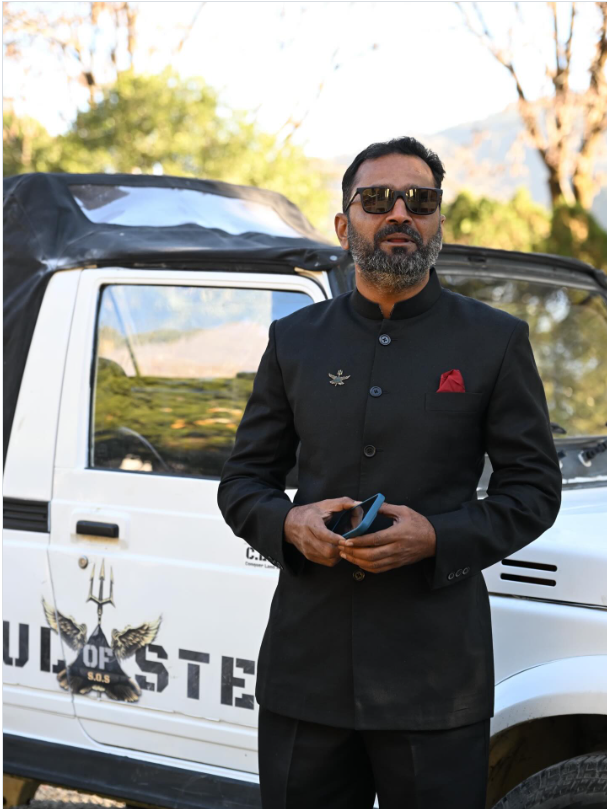

| Attribute | Details |
|---|---|
| Full Name | Vivek Jacob |
| Rank | Major (Retired) |
| Service | Indian Army |
| Location | Sitabani Jim Corbett National Park Ramnagar Forest Area |
| Regiment | 9 Para (Special Forces) |
| Years of Service | Approx. 10 years |
| Year of Retirement | 2017 |
| Background | Special Forces Operations |
| Known For | Special Forces service, motivational speaking, veteran welfare |
| Current Role | Public Speaker, Social Entrepreneur, YouTuber |
| Organisation Founded | CLAW (Conquer Land And Water) |
| Core Interests | Adventure sports, meditation, carpentry |
| Nationality | Indian |
| Ethnicity | Malayali |
| Primary Work Post-Retirement | Veteran welfare, disability adventure programs |
Early Life and Family Background
Vivek Jacob was born into a military family, a background that quietly but firmly shaped his worldview. He is a Malayali by origin and grew up largely in North India, adapting early to cultural diversity and disciplined living.
His father served as a para commando in the Indian Army, a fact that placed the idea of service above self into Jacob’s life from childhood. Army families grow up differently. Stability is replaced by transfers. Comfort gives way to resilience. Patriotism becomes practical, not decorative.
Growing up in this environment, Jacob saw firsthand what duty meant—not as an abstract concept, but as daily commitment. This upbringing played a decisive role in his decision to join the armed forces, fully aware of the sacrifices involved.
| Family Member | Details |
|---|---|
| Father |
Col Mathew Jacob (first cadet directly Commision in 9 para SF) |
| Mother | Not publicly disclosed |
| Siblings | Vinay Jacob |
| Marital Status | Not publicly disclosed |
| Children | Not publicly disclosed |
| Family Influence | Strong military upbringing, discipline-oriented household |
| Upbringing | Grew up in North India in an Army family environment |

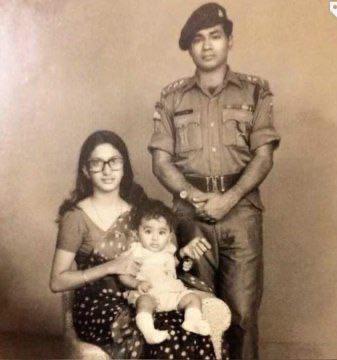
Source: Reddit
Choosing the Hardest Path: Joining the Special Forces
Joining the Indian Army is challenging. Volunteering for special forces is a different level of commitment altogether.
Jacob chose to serve in the 9 Para SF, one of the most elite and battle-hardened units in the world. This regiment operates under extreme secrecy. Missions remain classified. Success often goes unreported. Failure is not an option.
From the outset, Jacob knew what lay ahead. His family background ensured there were no illusions about glamour or comfort. What awaited him was physical exhaustion, mental strain, and absolute accountability.
Gruelling Training That Tests More Than Muscles
Special forces training is often described as brutal, but that word barely captures its depth. Jacob’s training pushed both body and mind to their limits.
Physically, it involved long endurance marches—60 to 80 kilometres within fixed timelines, carrying heavy combat loads. These exercises tested stamina, pain tolerance, and mental focus.
Yet, as Jacob often recalls, the toughest moments were not always physical.
“It is not easy,” he says, “to translate a Hindi newspaper into English at 1am from a hideout full of dirty water and mosquitoes.”
This single example reveals the true nature of special forces life. Combat demands strength, but intelligence work demands precision under exhaustion. Clarity must survive chaos.
A Decade in the Shadows
Jacob served for ten years in special forces, operating in some of the most hostile terrains in the country. His work involved counter-terror operations, extended deployments, and prolonged periods of isolation.
Details of his missions remain undisclosed—and rightly so. Special forces thrive on anonymity. Friends knew little. Enemies knew nothing. Silence was survival.
Living constantly on the edge of life and death reshaped Jacob’s inner world. Combat strips away illusions quickly. It forces uncomfortable questions.
“War or conflict makes you realise that you can leave this universe anytime,” he reflects.
“Who are we? Why are we here killing each other? We could all live in harmony instead.”
These reflections planted the seeds of his philosophical and spiritual outlook.
Retirement in 2017 and the Challenge of Civilian Life
Jacob retired from the Indian Army in 2017, carrying with him years of intense conditioning. For many veterans, this transition proves harder than combat itself.
Military life demands constant alertness. The mind stays tuned to threat, risk, and reaction. Civilian life removes that danger overnight—but the conditioning remains.
Jacob speaks candidly about this phase. Like many soldiers, he struggled to adjust to a world without operational urgency.
He strongly believes that structured psychological support for retiring officers is essential. In countries like the United States, the absence of such systems has led to serious issues, including PTSD-related crises among veterans.
“You are conditioned to be in a constant state of readiness,” he explains.
“When you enter civilian life, that danger is not there, but your mind doesn’t switch off. There should be counselling on how to adjust.”
Healing Through Craft, Movement, and Stillness
Jacob found balance through simple, grounded pursuits. He turned to carpentry, a craft that rewards patience and focus. He immersed himself in adventure sports, reconnecting with controlled risk rather than uncontrolled threat.
He also embraced meditation, learning to sit with silence instead of fighting it. These practices helped him process experiences without suppressing them.
This phase was not an escape. It was recalibration.
The Promise That Changed Everything
A defining moment came when a paralysed Indian Air Force officer asked Jacob a simple question:
“Can I go scuba diving?”
The question carried immense logistical challenges. Scuba diving for a paralysed person requires specialised equipment, medical supervision, trained instructors, and funding.
Jacob realised that making it possible for one person would require creating an entire ecosystem.

Founding CLAW: Conquer Land And Water
That promise led to the creation of CLAW (Conquer Land And Water), an initiative run by Army veterans to enable adventure sports for people with disabilities.
CLAW began small, with limited resources and no guaranteed funding. What it had instead was conviction.
Jacob and his team travelled from Chandigarh to Lakshadweep, organising a pioneering programme that trained 120 paralysed individuals in scuba diving. Doctors, safety teams, and adaptive equipment made the impossible possible.
“We are a small group,” Jacob says, “but we are growing.”
Growth here means dignity, confidence, and reclaimed dreams.
Returning to the Himalayas—With a New Purpose
Jacob recently returned to the Himalayas, a region where he once conducted counter-terror operations. This visit carried no weapons, no missions, and no fear.
“It was magical,” he says. “I experienced a lot of beautiful things.”
He now plans to establish a base there focused on adventure training and life skills, especially for young people and veterans. The mountains that once witnessed conflict may now nurture resilience and learning.
Rise as a YouTube Speaker and Mentor
In recent years, Jacob has emerged as a YouTube personality whose talks frequently go viral. His content stands apart from typical motivational material.
Young people write to him about careers, relationships, anxiety, and purpose.
“I feel it is important to reply to all of them,” he says.
“I feel I have a perspective that will heal them.”
That perspective comes not from theory, but from lived reality.
Philosophy Forged in Combat
Jacob’s philosophy avoids extremes. He does not glorify war, nor does he deny its necessity. He speaks of peace without sounding naïve.
Combat, he believes, clarifies priorities. It reveals how fragile life is and how unnecessary hatred becomes when mortality feels close.
This balance resonates deeply with audiences tired of shallow inspiration.
Personal Life and Values
While Jacob remains private about his personal life—a habit shaped by years of classified service—he consistently credits his family upbringing, military discipline, and spiritual exploration for shaping his values.
Integrity, service, and accountability define his choices today as much as they did during his years in uniform.
Why Major Vivek Jacob’s Story Matters
Major Vivek Jacob represents a rare blend of warrior and thinker, discipline and compassion. His life challenges the stereotype that soldiers struggle to find meaning after service.
Instead, his journey shows that meaning evolves.
From secret missions to open conversations, from combat zones to healing spaces, Jacob continues to serve—just in a different uniform.
Final Thoughts
Major Vivek Jacob’s biography is not just a military story. It is a human story—about resilience, reflection, and responsibility.
His life reminds us that true strength lies not only in surviving battle, but in returning with empathy intact.
And in a world that often glorifies noise, his journey proves that wisdom, when earned honestly, never needs to shout.