War History
Battle of Hilli (1971): India’s Bloodiest and Most Determined Victory.
Battle of Hilli (1971): India’s Bloodiest and Most Determined Victory
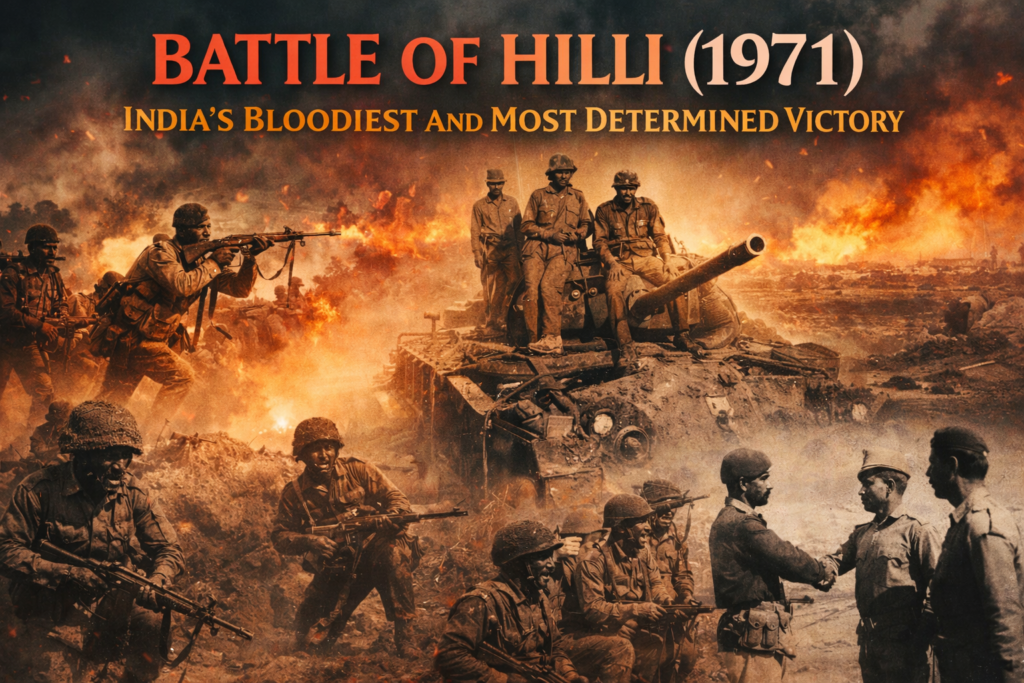
Battle of Hilli (1971): India’s Bloodiest and Most Determined Victory. fought by the Indian Army during the Indo-Pak War of 1971. It was a long, exhausting, and brutal battle that tested the courage, leadership, and endurance of Indian soldiers to the extreme.
Lt Gen J. S. Aurora later described Hilli as the bloodiest battle in East Pakistan, where Indian troops fought with the clear belief that retreat was not an option.

📍 Background: Why Hilli Was So Important
The battle was fought at Hilli, a heavily defended town in East Pakistan (present-day Bangladesh). Hilli was strategically critical because it controlled the main road leading to Bogura, an important military and communication centre.
Capturing Hilli was essential for Indian forces to break Pakistan’s defensive line and push deeper into enemy territory. What made the battle unique was that fighting began even before the official declaration of war and continued after Pakistan’s formal surrender, showing how intense the situation was.


⏳ Timeline: Two Brutal Phases of Fighting
The Battle of Hilli was fought in two major phases:
22–24 November 1971
10–11 December 1971
Both phases saw relentless attacks, fierce counter-attacks, and close-range fighting under extremely difficult conditions.
🛡️ Enemy Defences: A Strongly Fortified Position
Pakistani forces had turned Hilli into a defensive fortress, protected by:
Reinforced concrete bunkers
Deep trench systems
Extensive minefields
Barbed wire obstacles
Interlinked firing positions
Flooded paddy fields around Hilli made tank movement almost impossible. As a result, Indian infantry had to advance on foot, exposed to heavy machine-gun and artillery fire.

🔥 Nature of Combat: Fighting Inch by Inch
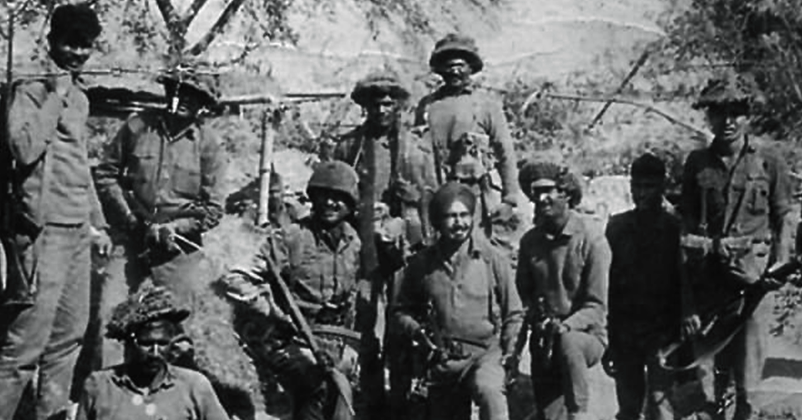
The fighting at Hilli was among the most intense infantry battles of the 1971 war. It included:
Hand-to-hand combat
Night assaults
Strong enemy counter-attacks
Close-quarter battles inside fortified positions
Indian soldiers often crawled through mud and water, moving forward inch by inch under constant fire, showing extraordinary bravery and determination.

🪖 Leadership and Infantry Spirit
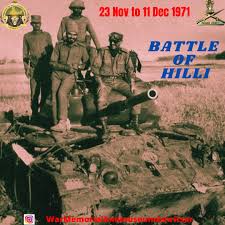
The Battle of Hilli highlighted the finest traditions of the Indian Army:
Officers leading from the front
Junior leaders taking command under fire
Unbreakable infantry spirit
Excellent coordination between infantry, artillery, engineers, and armour
Despite heavy casualties — including the loss of 70 soldiers from 8 Guards alone — Indian troops held their ground and continued the assault.
⚔️ Tactical Adaptation and Final Breakthrough
Victory at Hilli was achieved through:
Tactical flexibility
Continuous pressure on enemy positions
Bold manoeuvres under heavy fire
Eventually, Pakistani forces were forced to abandon Hilli, opening the road to Bogura and delivering a major operational success for India in the eastern sector.

🎖️ Gallantry and the Legacy of Hilli
The Battle of Hilli saw exceptional acts of bravery, resulting in numerous gallantry awards on both sides. The battle remains a classic case study in military training for combat in fortified and built-up areas.
It teaches lasting lessons in:
Determination
Leadership under fire
Adaptability in extreme battlefield conditions
In a Tribute to India’s Brave Soldiers
The Battle of Hilli (1971) was not just a military victory — it was a story of sacrifice, courage, and unshakable resolve. Indian soldiers fought knowing that success demanded everything they had.
Their bravery played a crucial role in India’s victory in the 1971 war and remains forever etched in the nation’s military history as one of its bloodiest yet most inspiring battles.