War History
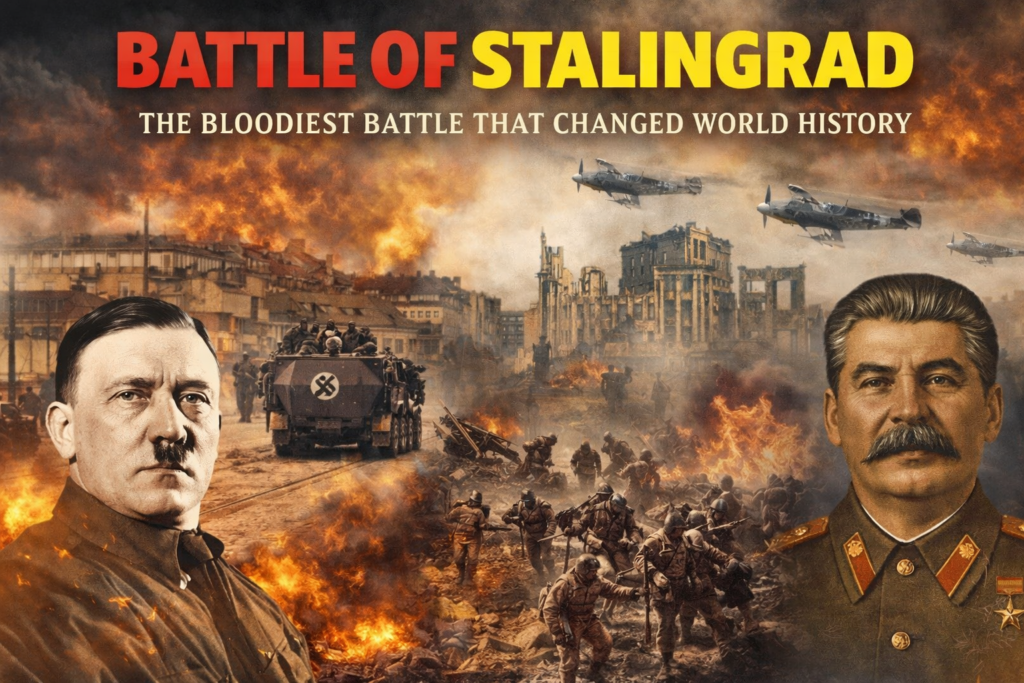
Battle of Stalingrad: The Bloodiest Battle That Changed World History.
Battle of Stalingrad: The Bloodiest Battle That Changed World History.
Battle of Stalingrad: The Bloodiest Battle That Changed World History. Some battles decide wars.
But a few battles change the course of human history.
The Battle of Stalingrad (1942–1943) was one such battle. It remains the bloodiest battle ever fought, where more than two million soldiers and civilians were killed, wounded, or captured in a single city.
Stalingrad became a frozen hell of fire, rubble, hunger, and unimaginable sacrifice — and the place where World War II began to turn.
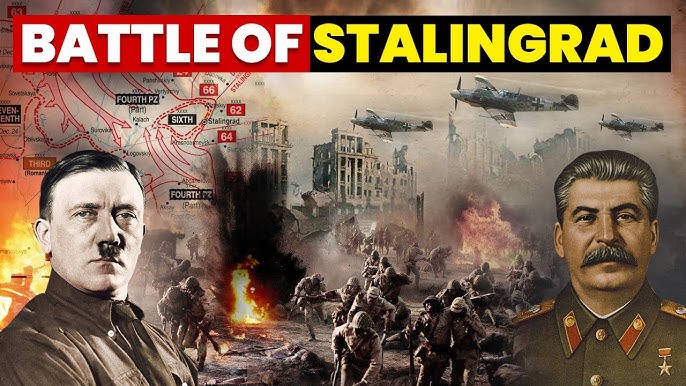

Why Stalingrad Was So Important
Stalingrad was not just another city on the map.
It was:
A major industrial and manufacturing center
Located on the Volga River, a vital supply route
A powerful symbol, as it carried the name of Soviet leader Joseph Stalin
For Adolf Hitler, capturing Stalingrad meant crushing Soviet morale and breaking the USSR.
For the Soviet Union, losing it meant losing the war.
There could be no compromise.
When a City Turned Into a Battlefield
From the moment fighting began, Stalingrad stopped being a city.
Every street became a frontline
Every ruined building turned into a fortress
Every room, staircase, and basement became a battleground
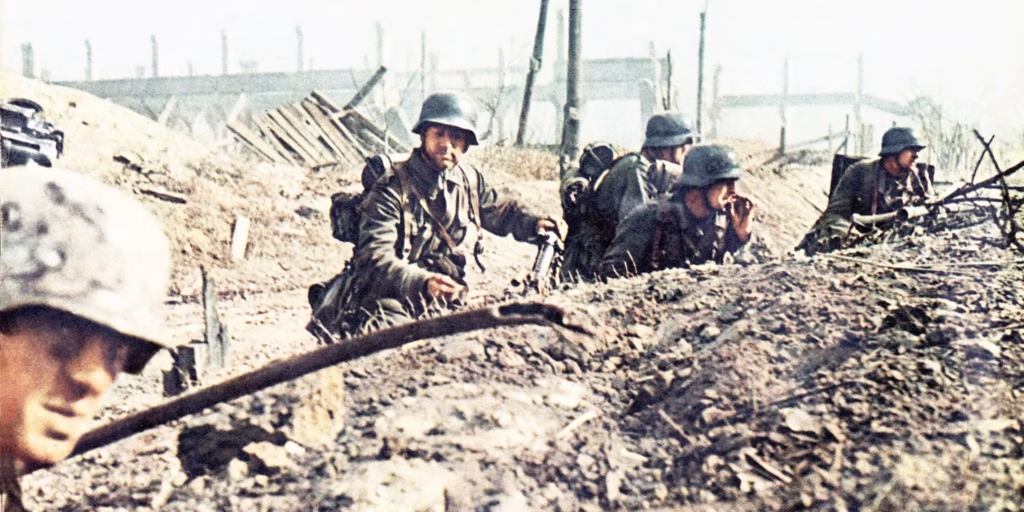
German and Soviet soldiers fought house to house, room to room, often at point-blank range. Survival chances were low, but retreat was impossible.
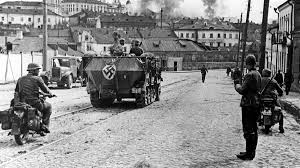
Hitler’s Army Meets Its First True Test
The German invasion began with confidence. Hitler believed his army was unbeatable after victories across Europe.
But Stalingrad exposed a fatal mistake.
The German command underestimated Soviet resistance. Soviet soldiers fought with desperation, knowing there was nowhere left to fall back. Every delay weakened the German advance.

source: history.howstuffworks
“Not One Step Back”: Stalin’s Ruthless Order
As losses mounted, Joseph Stalin issued his most famous and brutal command:
“Not one step back.”
Retreat was forbidden.
Soldiers who withdrew without orders faced severe punishment.
The message was clear:
Stalingrad must be held — at any cost.
Hell on Earth: Fire, Smoke, and Rubble
Stalingrad turned into a nightmare beyond imagination:
Constant air raids reduced buildings to rubble
Smoke and fire darkened the sky
Dead bodies filled streets, factories, and homes
Civilians were trapped in the city, many joining the fight or helping wounded soldiers. There was no safe place left in Stalingrad.

source: history.com
Snipers and Silent Death
One of the most feared aspects of the battle was sniper warfare.
Legendary Soviet sniper Vasily Zaitsev became a symbol of resistance. His deadly duels, including the famous encounter with Major König, turned ruins into silent killing grounds where one bullet meant death.
Snipers controlled streets, slowed enemy movement, and shattered morale.
The Russian Winter Joins the Battle
As the fighting dragged on, nature became a weapon.
The Russian winter brought temperatures down to -40°C.
Tanks froze
Fuel solidified
Weapons jammed
Soldiers froze to death in open positions
The cold showed no mercy — German or Soviet.
Operation Uranus: The Turning Point
Then came the moment that changed everything.
In November 1942, the Soviets launched Operation Uranus, a massive counteroffensive aimed at the weaker German flanks.
The result was devastating:
Nearly 300,000 German troops were surrounded
Supply lines were cut
Escape routes vanished
Hitler ordered his army to hold their ground. Retreat was forbidden.
The German Sixth Army was trapped.
The Historic Surrender That Shocked the World
In February 1943, the unthinkable happened.
German General Friedrich Paulus surrendered, directly disobeying Hitler’s order to fight to the last man.
It was the first major surrender of a German army in World War II.
The myth of German invincibility was destroyed forever.
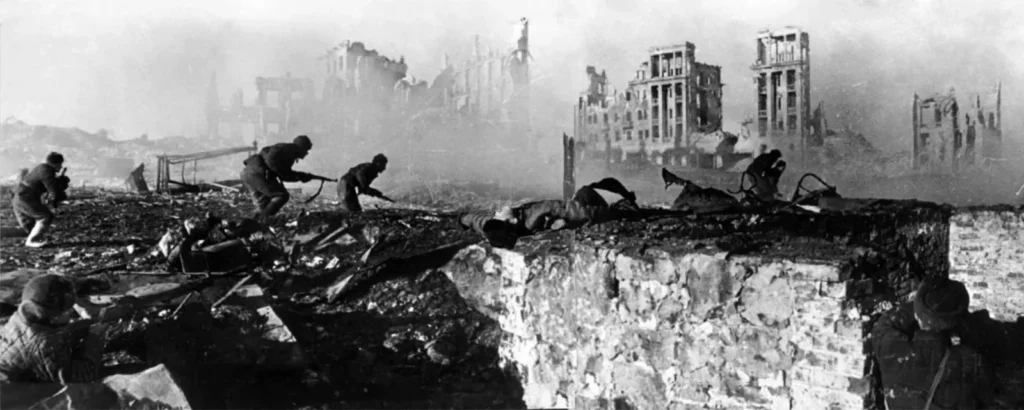

Stalingrad: More Than Just a Battle
Battle of Stalingrad: The Bloodiest Battle That Changed World History. By the end of the fighting, Stalingrad no longer existed as a city.
What remained was:
A symbol of unbreakable courage
Proof of human endurance under extreme suffering
A decisive turning point in World War II
Stalingrad did not just defeat an army.
It changed the direction of the war and the fate of the world.

Why the Battle of Stalingrad Still Matters Today
The Battle of Stalingrad teaches us that:
The human spirit can survive unimaginable horror
Determination can defeat even the strongest military power
History can change in the ruins of a single city
A burning, frozen battlefield became the place where World War II began to turn against Nazi Germany.